
Selecting a multi-stem tree for a landscaping project goes far beyond aesthetic preference. The chosen species must be compatible with the local climate, the size of the space, soil and exposure conditions, and the project's functional goals. This guide presents the most relevant criteria for making that decision with confidence.
1. Project type and scale of the space
The first question to ask is: what role does this tree play in the project? Focal, structuring, or framing?
- Single focal point: A specimen that concentrates attention: a hotel entrance, an office courtyard, a landmark private garden. Here the aesthetic criterion dominates. Species such as Acer palmatum or Liquidambar styraciflua are natural choices for the uniqueness of each specimen.
- Structuring in groups: Several specimens that define the character of an area: a grove, a park boundary, covering a seating area. Consistency between specimens matters here. Lagerstroemia indica in groups of three to five creates much-loved urban-grove effects.
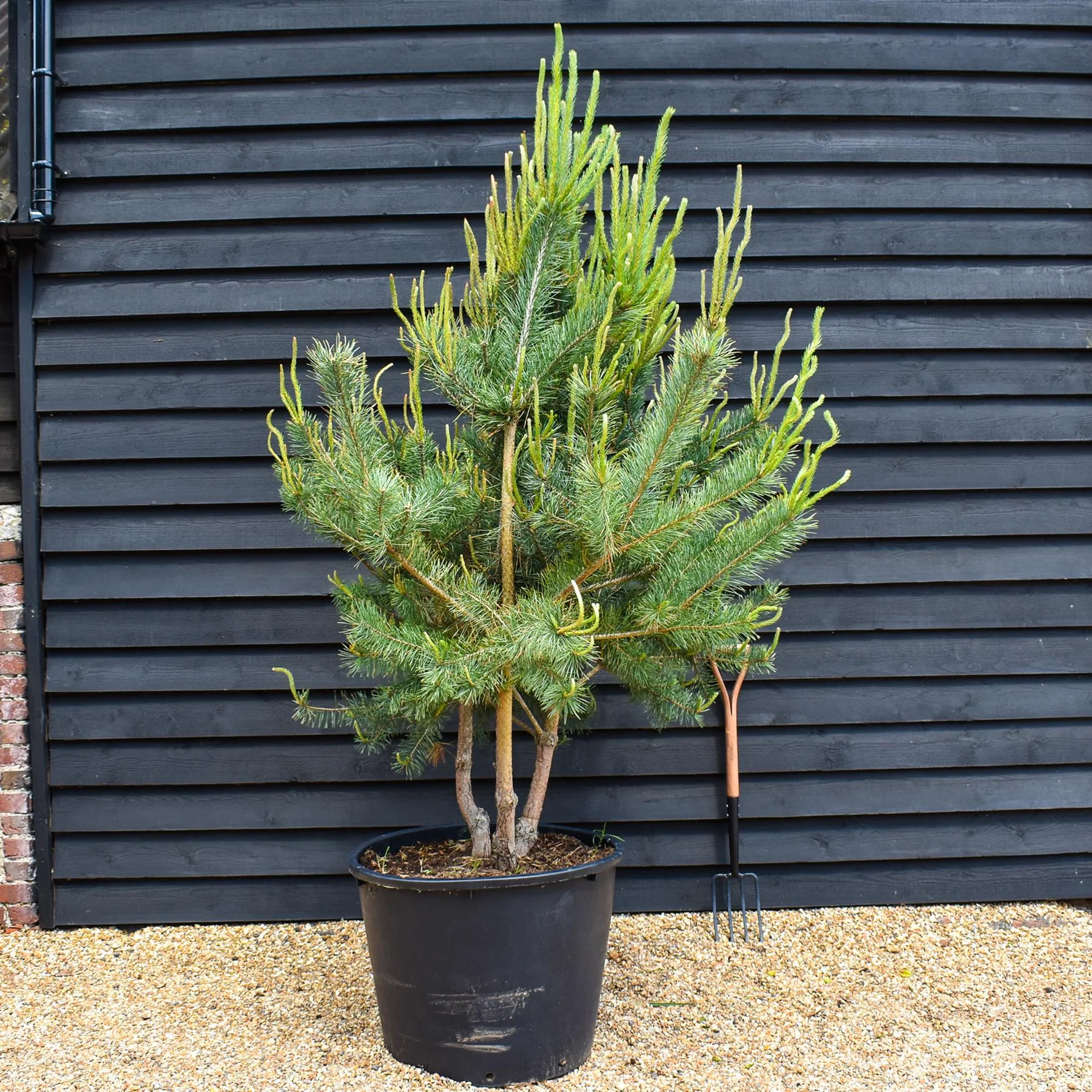
- Peripheral framing: Backdrops or boundary borders. Multi-stem Pinus sylvestris is a robust solution for large scales and harsh conditions.
2. Sun exposure and climate conditions
Multi-stem species have very different tolerances to sun exposure, wind and cold:
- Acer palmatum
- Part shade to filtered sun. Sensitive to strong wind and intense direct afternoon sun. Prefers a temperate climate.
- Pinus sylvestris
- Full sun. Very hardy: tolerates drought, extreme cold and poor soils. Suited to high-altitude areas or exposed interior locations.
- Osmanthus heterophyllus
- Sun to part shade. Tolerates drought well once established. Good resistance to urban pollution.
- Liquidambar styraciflua
- Full sun. Prefers deep, cool soils. Maximum autumn colour in locations with more marked temperature swings.
- Lagerstroemia indica
- Full sun essential. Resistant to summer heat and drought. Excellent for a Mediterranean climate.
3. Size: how much space and how much time
Size is perhaps the most practical criterion, and one often undervalued in the early project stages. In professional landscaping, the most common multi-stem sizes range from 10–14 cm (circumference at 1 m height) to 20–25 cm for specimens of great immediate impact.
Practical rule for choosing size:
- Projects with a short delivery deadline to the client (works completed in 18 months or less): favour 16–20 cm sizes for immediate presence.
- Projects with guaranteed growing space and maintenance: 12–16 cm sizes offer a better cost/result ratio over 3–5 years.
- Projects in constrained urban spaces (pavement, terrace, roof gardens): smaller sizes, 10–14 cm, with less weight and root-ball volume, ease logistics and installation.
4. Post-planting maintenance characteristics
One of the most common mistakes in a project is choosing species with high maintenance needs without a budget or plan to support them. In multi-stem trees, requirements vary widely:
- Low maintenance: Pinus sylvestris, Osmanthus heterophyllus (once established).
- Moderate maintenance: Lagerstroemia indica (annual formative pruning to maximise bloom), Liquidambar styraciflua (watering in the first summers).
- More demanding maintenance: Acer palmatum, sensitive to incorrect installation, irregular watering and stress conditions. Requires prepared soil, mulching and wind protection.
5. The question of availability and lead time
In large-scale projects, stock availability is often the limiting factor, not price or species. Multi-stem trees of 18–25 cm size are produced in limited quantities and are in high demand in European markets between February and May.
Practical recommendations:
- Confirm availability at least 3 to 6 months in advance for orders above 10–15 medium/large-size specimens.
- For projects requiring visual consistency between specimens (hotels, commercial spaces), reserve specimens with prior photographs.
- Always have a client-approved alternative species plan: flexibility of choice greatly reduces the risk of delay to the works.
6. Selection checklist for designers
Need help with selection?
With 30+ years of experience in B2B supply, Âmbarplant helps find the right species, size and quantity for each project. We respond on the same business day.
Talk to the team View catalogue