
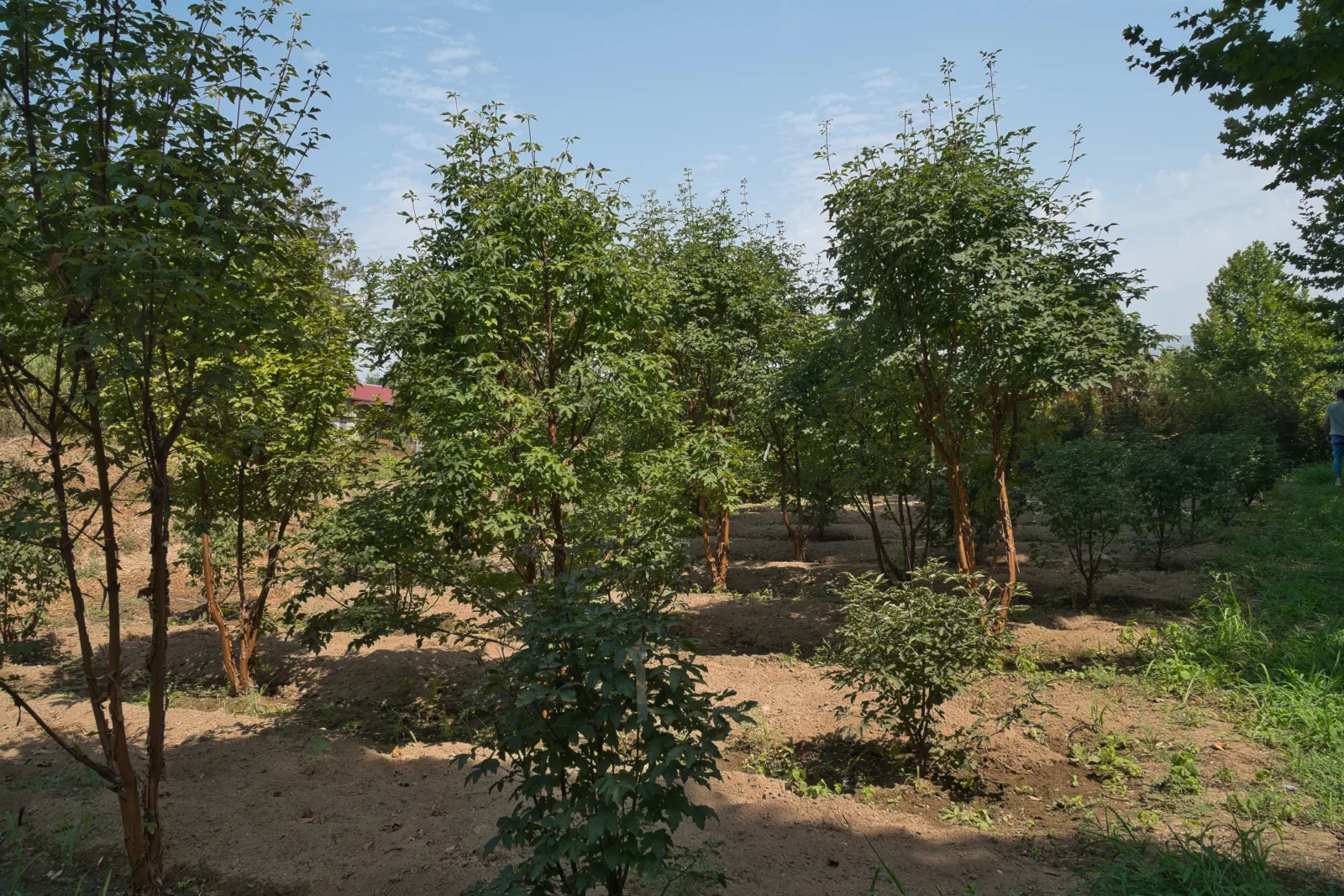
A multi-stem is a tree or tree-form shrub that, from its first years in the nursery, is trained to develop two, three or more trunks from the base. Instead of the single central axis that characterises most trees, the multi-stem grows on several independent axes but with a shared canopy, resulting in a wider, human-scaled silhouette with immediate visual impact in any garden composition.
How a multi-stem is produced
Production starts early. In the very first years of nursery growth, the grower intervenes in training the plant: either through multiple grafting, or through formative pruning that stimulates several vigorous shoots to break from the base. Each shoot is then selected and guided to grow in harmony with the others, without destructive competition between axes.
This process takes time. Depending on the species and the desired size, a quality multi-stem can require between five and fifteen years of nursery training before it is ready for market. It is this investment in time that explains the higher cost compared with a single-trunk specimen of equivalent size, and also what gives the multi-stem its character as a unique, unrepeatable piece.
What it is for: the three main functions
1. Focal element in garden composition
The most common function of the multi-stem is to serve as a focal point in a composition. The wide canopy and multi-trunk structure create a presence that no other plant form can match at the same scale. In designer gardens, design hotels, prestige offices and wine-tourism estates, the multi-stem is often the element around which the whole composition is organised: the point where the eye arrives, the space's centre of gravity.
2. A scale solution for medium-sized spaces
One of the great virtues of the multi-stem is its ability to fill spaces where a conventional single-trunk tree would be disproportionate: canopy too high, trunk too slender, too little visual mass at eye level. The multi-stem solves this scale problem naturally: the canopy starts low, the volume spreads laterally, and the presence is immediate even in smaller areas, such as courtyards, terraces, entrance gardens or indoor commercial spaces.
3. Ornamental interest all year round
In a single-trunk specimen, when the leaves fall, the trunk remains. In the multi-stem, when the leaves fall, the architecture of the trunks reveals itself in all its complexity. This is one of the reasons why designers of high-end gardens choose the multi-stem even in cold climates or for spaces where the garden has to work visually in every season:
- The Pinus sylvestris keeps its canopy and displays its orange-tinted bark all year round.
- The Acer palmatum goes through three distinct moments: delicate spring foliage, dense green in summer, intense autumn colour; and in winter the fine branching reveals itself as a natural sculpture.
Multi-stem vs. single trunk: how to choose
The decision between the two forms is not just aesthetic. It depends on the function the plant will perform in the project:
- Free circulation at the base: pavements, avenue rows, spaces where passage beneath the canopy at the regulation height is required call for a single trunk with a raised canopy start.
- Visual focal point or structuring element: carefully composed gardens, entrances, courtyards, seating and reception areas benefit from the multi-stem form.
- Speed of impact: when the delivery deadline to the client doesn't allow years of waiting for a mature tree, the multi-stem offers immediate presence at a size a single-trunk specimen rarely reaches in the same production time.
- Reduced scale: in spaces where the canopy of a mature tree would be too tall, the multi-stem allows volume and presence without compromising the space's proportions.
Which species are produced in multi-stem form
Not all species respond well to multi-stem training. Those that produce the best results (due to their growth characteristics, plasticity of form and ornamental interest) are the ones you'll find in the Âmbarplant catalogue:
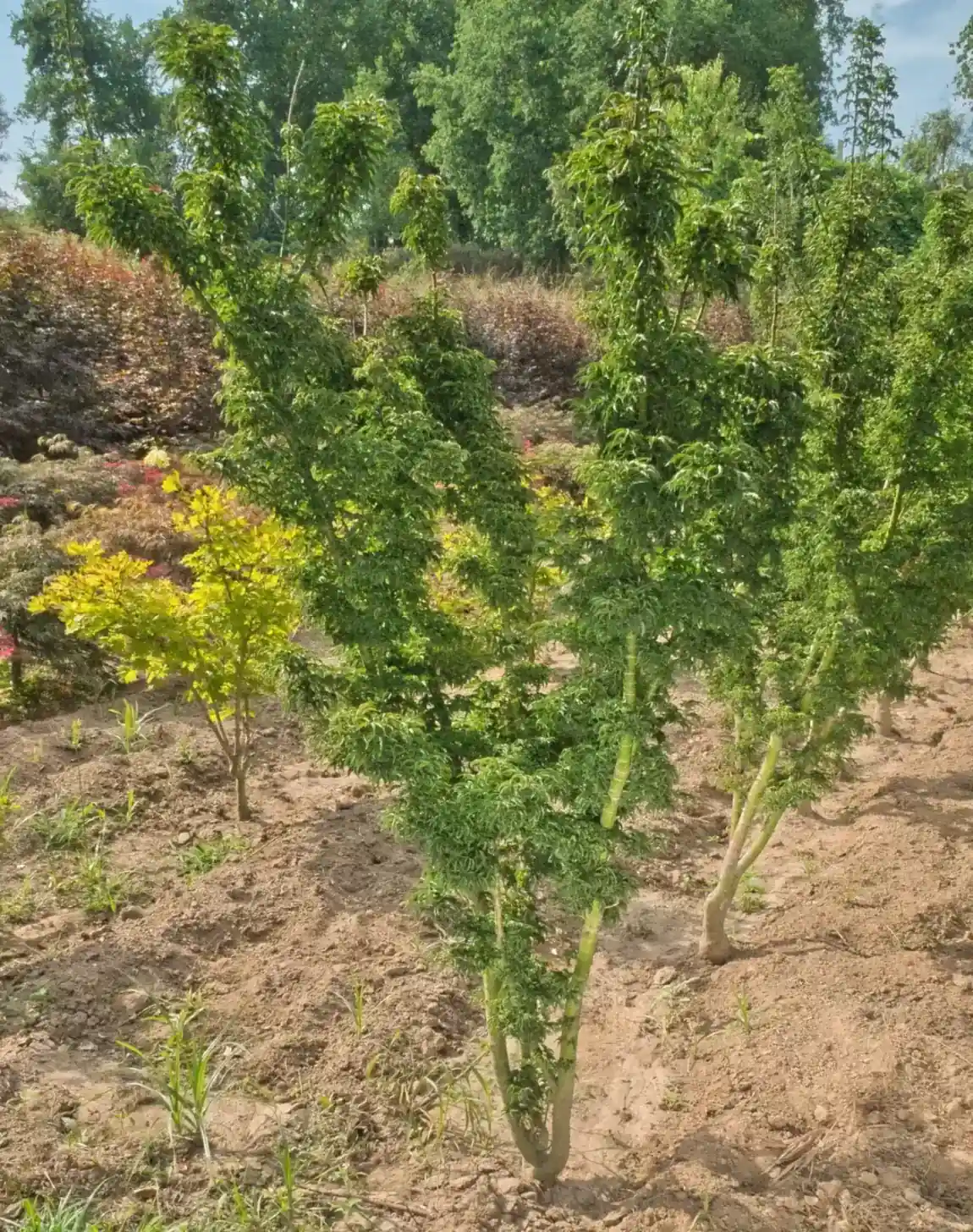
Acer palmatum
Japanese maple, delicate silhouette, fine foliage and intense autumn colour. The classic choice for carefully composed gardens and intimate-scale spaces.
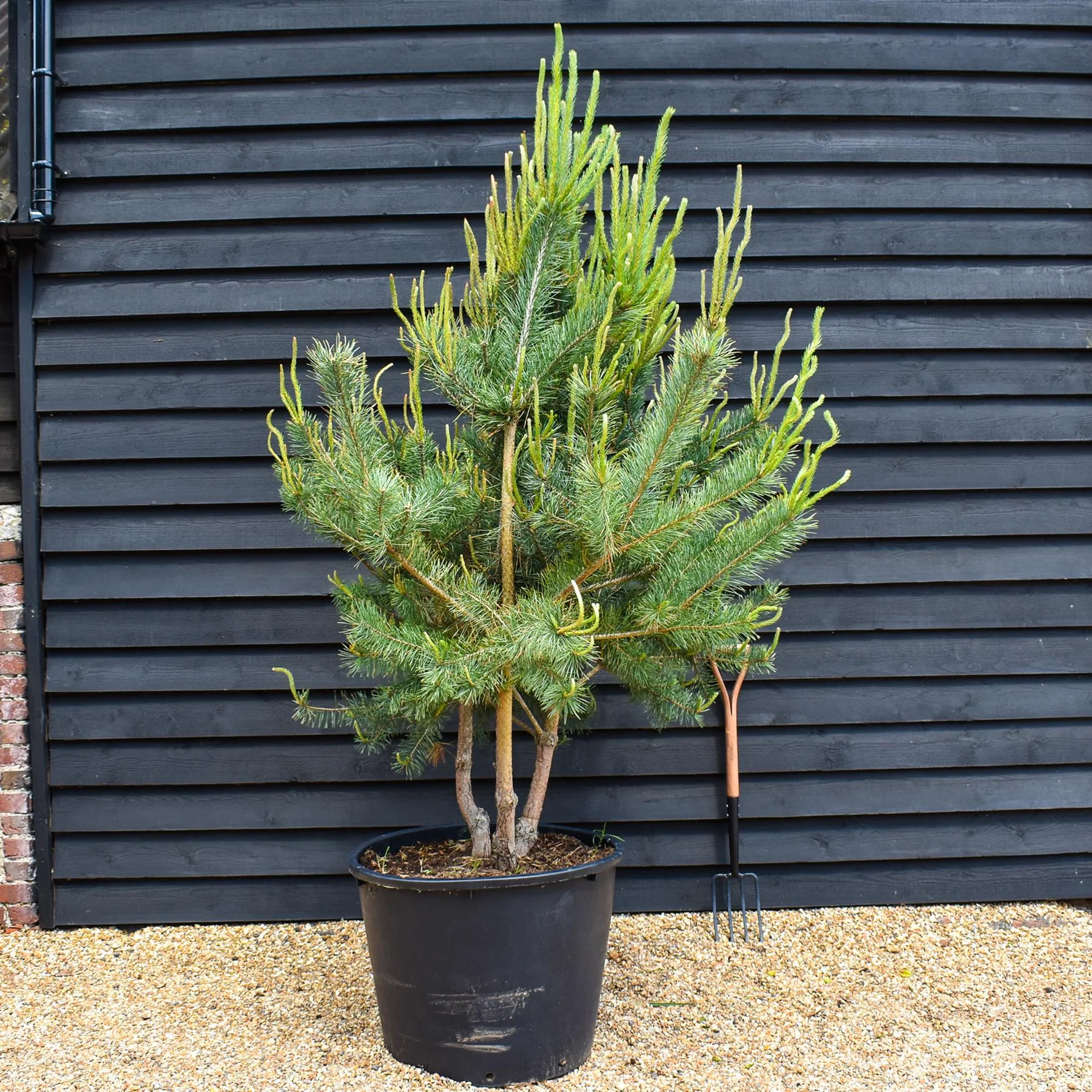
Pinus sylvestris
Scots pine, umbrella-shaped canopy, orange bark and permanent presence. The highest-impact solution for large-scale spaces.
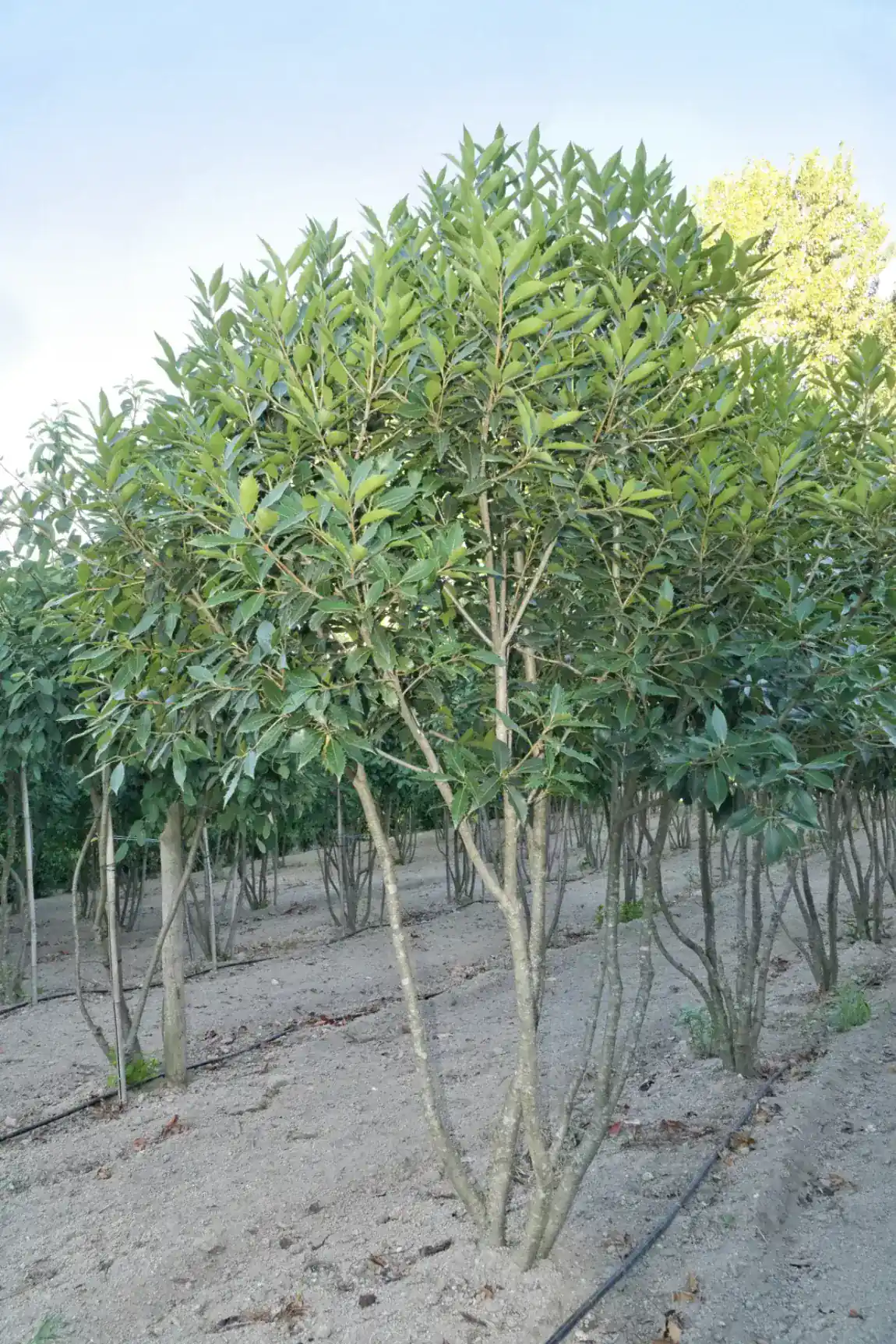
Osmanthus heterophyllus
Evergreen with persistent foliage and intensely fragrant bloom. Ideal for those needing year-round green volume and a discreet but structuring presence.
What to consider when specifying a multi-stem
When including a multi-stem in a specification or request for proposal, the most relevant parameters are:
- Species: determines the ornamental character, adaptation to local climate and maintenance needs.
- Number of trunks: usually indicated as a minimum (e.g. 3+ trunks). The more trunks, the greater the visual mass, but also the production cost.
- Size: main-trunk circumference measured at 1 metre in height, in centimetres. This is the reference measure for comparison between suppliers.
- Total height: especially relevant for dense-canopy species where the plant's height is more indicative than trunk size.
- Root form: root ball, bare root or container, with a direct impact on the planting window and establishment rate.
At Âmbarplant we always provide a full specification: species, size, number of trunks, height and root form. For projects with strict specifications, it is possible to request selection by photograph before supply.
Need to specify multi-stems for a project?
Send us the list of species, sizes and quantities. We respond with available stock and equivalent options on the same business day.
Request a quote View catalogue