
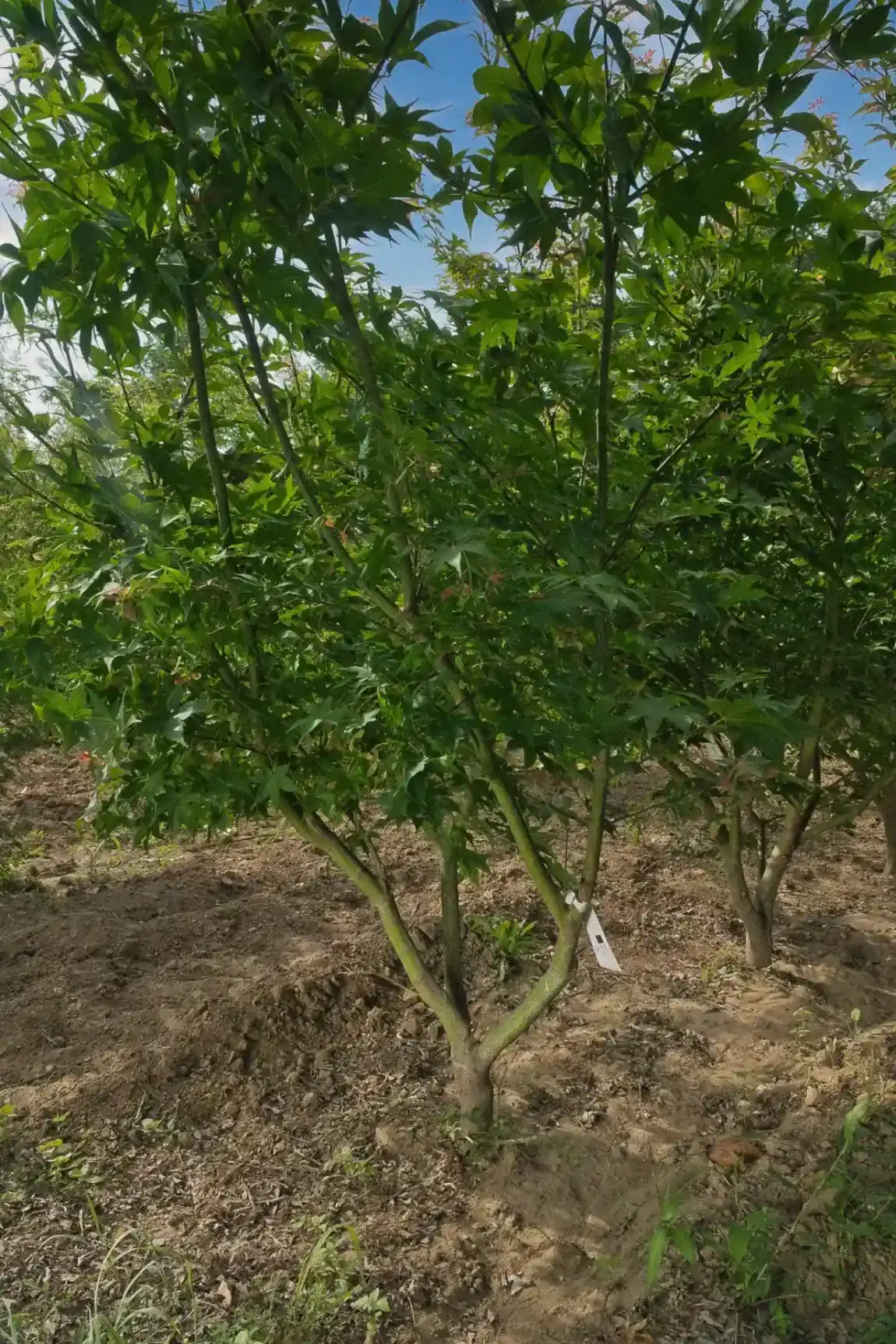
A multi-stem tree is grown from an early age to develop two, three or more trunks from the base, instead of the single central trunk typical of a naturally grown tree. The result is a wider, human-scaled silhouette, with immediate presence and far greater visual density than a single-trunk specimen.
What technically defines the multi-stem form
Unlike a single specimen, the multi-stem tree is trained in the nursery for several years to branch at, or very close to, ground level. Each trunk has its own diameter and habit, but grows in a shared direction, creating a unified structure with strong sculptural expression.
The term "multi-stem" is not botanically specific to any one species: it is a training form applicable to a wide range of trees and tree-form shrubs. What varies from species to species is the ease of training, the production time and the final aesthetic result.
Why it is so valued in designer landscaping
There are three fundamental reasons why landscape architects and designers of landmark spaces favour the multi-stem form:
- Immediate presence. A specimen with three to five trunks visually occupies the space in a way that a young single-trunk tree would take years to achieve. In projects where the delivery deadline to the client is critical, this is decisive.
- Human scale. The low, expanded canopy of the multi-stem form engages at eye level, making it ideal for courtyards, terraces, entrances and smaller gardens where the canopy of a conventional tree would be disproportionate.
- Ornamental value all year round. The multi-trunk structure has visual interest even in deciduous species: in the months without foliage, the architecture of the trunks, the bark texture and the branching become the decorative element. Pinus sylvestris, with its orange-toned bark, is an example where this effect is at its strongest.
Most used multi-stem species in Portugal
Not all species lend themselves equally well to multi-stem training. The most used in professional landscaping projects in Portugal and Europe are:
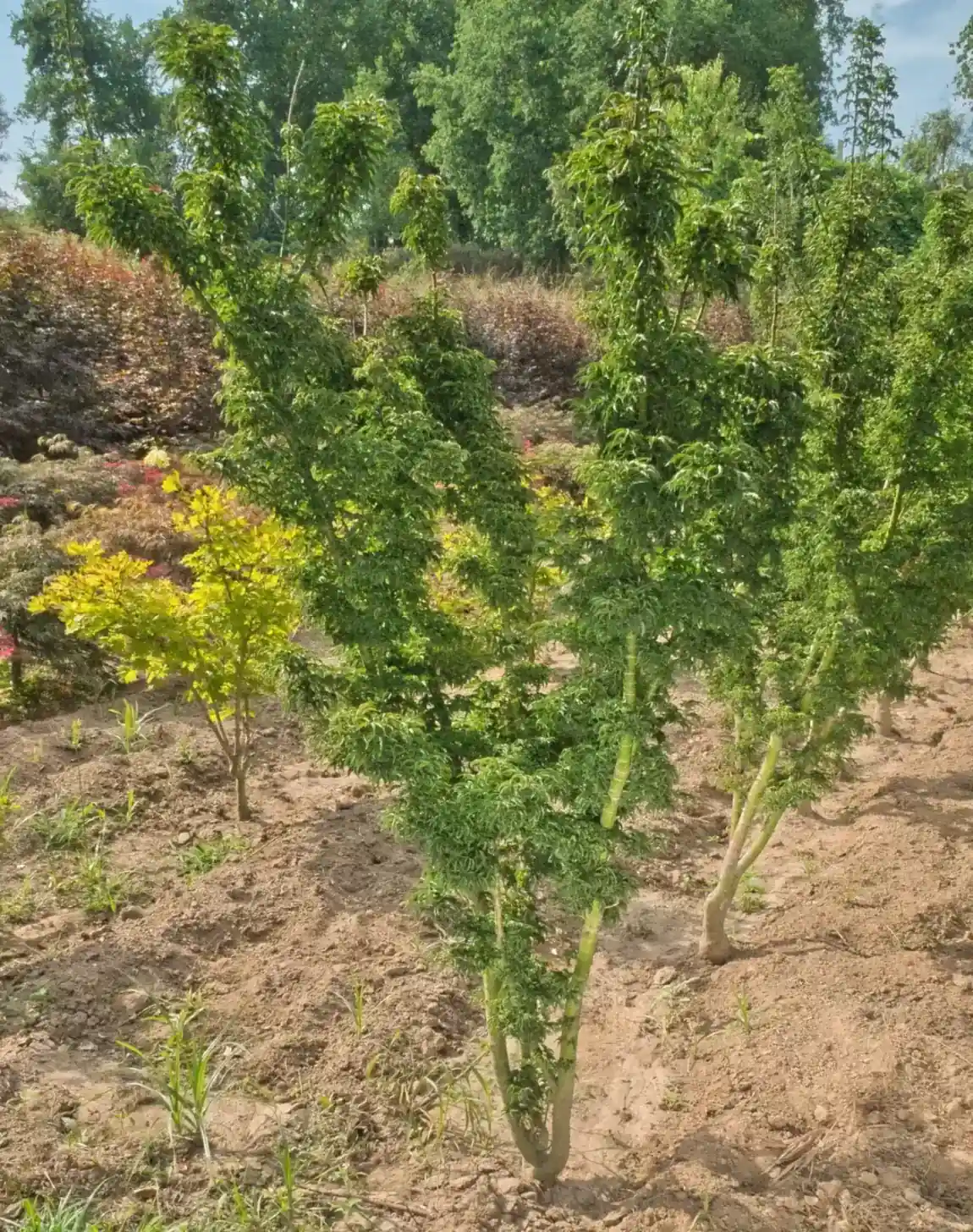
Acer palmatum
Japanese maple, the reference choice for carefully composed gardens. Fine foliage, exceptional autumn colour, delicate silhouette. Ideal for intimate-scale spaces.
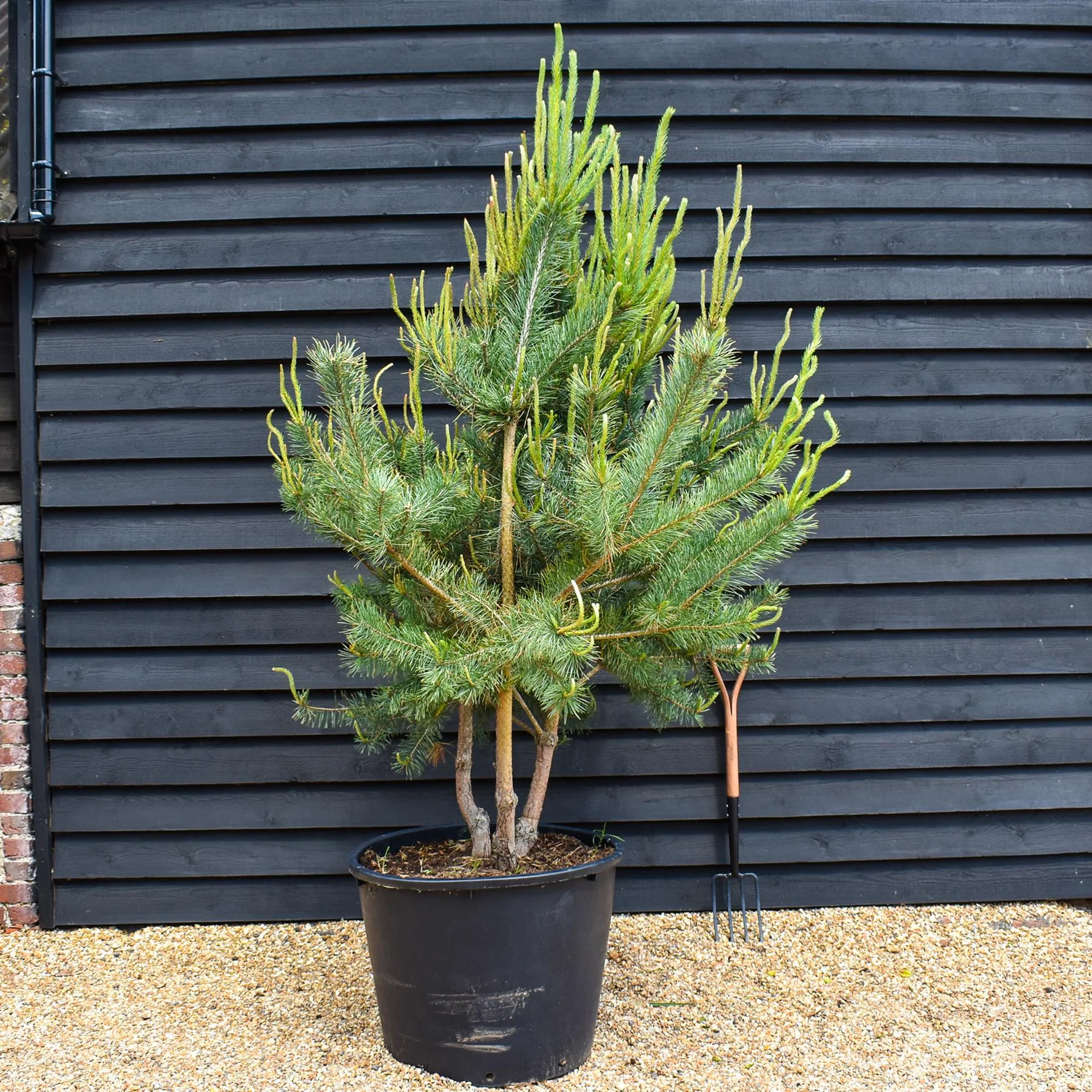
Pinus sylvestris
Scots pine, permanent sculptural presence. Umbrella-shaped canopy, highly expressive orange bark. A structuring solution for large-scale spaces.
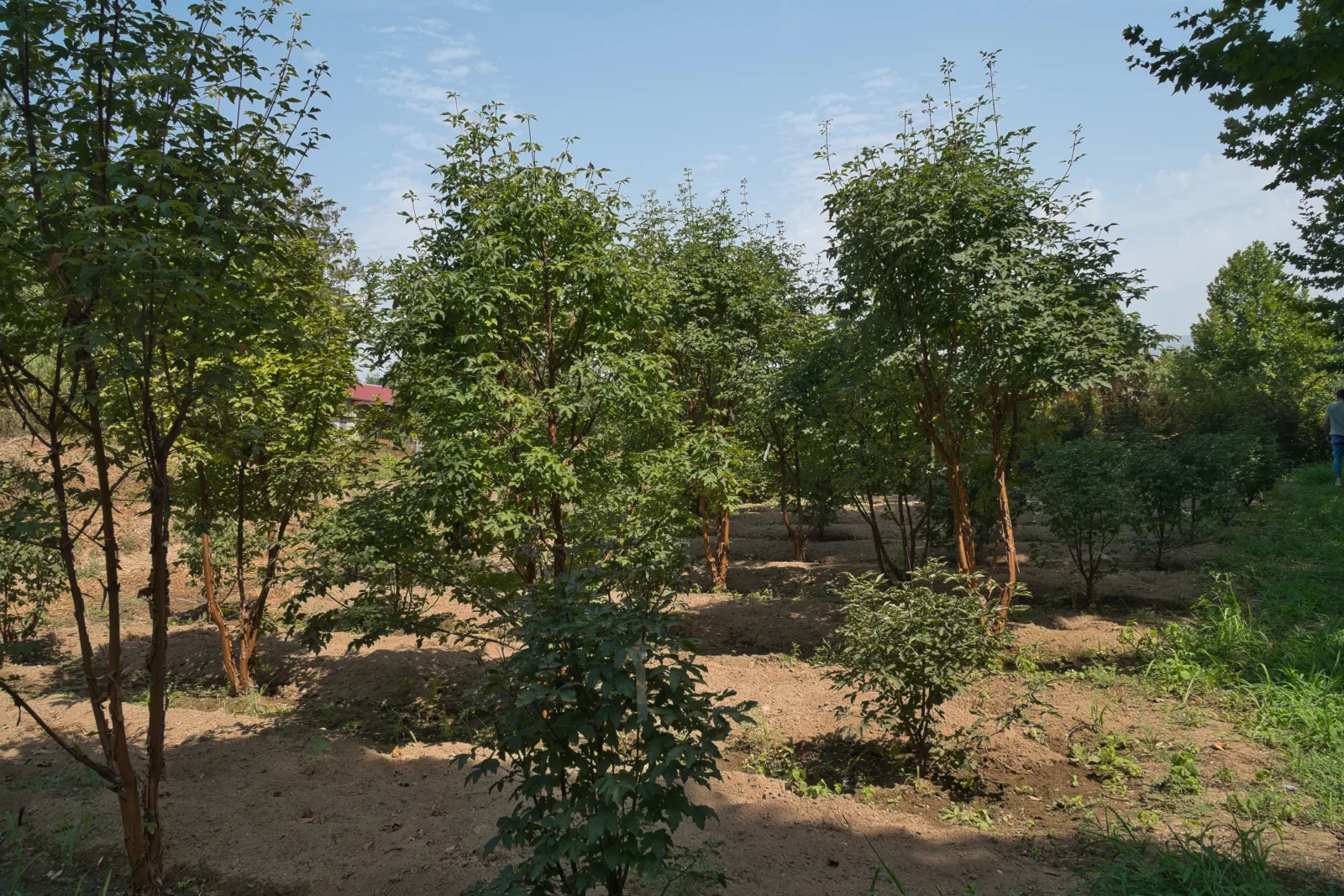
Liquidambar styraciflua
Liquidambar, an incomparable autumn display. Dense canopy in summer, foliage in shades of red, orange and purple in autumn. A tree of maximum seasonal impact.
Multi-stem vs. single trunk: when to choose each
The choice between multi-stem and single-trunk form is not just aesthetic. It is also functional:
- Small and medium-sized spaces (courtyards, residential gardens, entrances, indoor commercial spaces) benefit from the compact scale of the multi-stem form.
- Street-side rows or areas where free circulation at the base is a structural requirement generally call for a single trunk, with the canopy starting at the regulation height.
- Visual focal points in composition (feature points in designer gardens, hotels, offices) are an almost exclusive domain of the multi-stem form, thanks to its immediate impact and the uniqueness of each specimen.
How the size of a multi-stem tree is defined
In the B2B plant trade, size is the most commonly used dimensional reference, and in the case of the multi-stem two conventions coexist:
- Size by main-trunk circumference (in centimetres, measured at 1 metre in height). This is the measure most used for single-trunk trees but is applied to the thickest trunk in multi-stem specimens.
- Total height (in metres, from base to apex), more used in densely growing species or when overall volume matters more than trunk thickness.
At Âmbarplant we supply plants with size, height and minimum trunk number specified. For projects with strict specifications, it is possible to request specimens selected by photograph before supply.
Production time and availability
The multi-stem form requires years of nursery training, typically five to twelve years depending on the species and the desired size. This means market availability is always more limited than for single-trunk specimens, and that ordering ahead for large-scale projects is often necessary.
Âmbarplant keeps stock in Portugal and has access to production across the European network (Spain, the Netherlands, Germany), which allows us to meet volumes and species that the domestic market cannot supply.
Want to know current availability?
Send us the species, size and quantity. We respond with available stock and equivalent options on the same business day.
Request availability View catalogue